Showing posts with label Eden. Show all posts

Thursday, August 04, 2011

Skywatching with Black Kites!

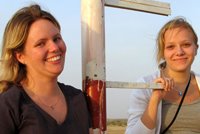
I just came back from two days at the field station and it was amazing... After we finished work on Wednesday, a coworker and I went for an afternoon stroll to the nearby lake. There were hundreds of black kites in the fields, in the trees, and in the sky.... It was beautiful and I enjoyed every moment of it!

For other skies around the world, visit Skywatch!

Note: for those of you wondering why I am posting from my blogger account, my ordinary blog esthergarvi.com was hacked this past weekend and I am still sorting through the mess. In the meantime, I have switched to blogger as there are too many beautiful things happening right now and life won't wait!

Tuesday, June 26, 2007

Land of Eden

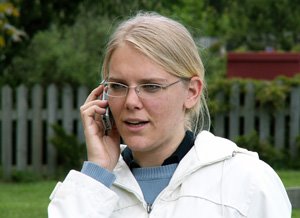
My turn to be peopleized! Szavanna, the Hungarian music lover (currently living in SA) whom I interviewed a little while ago, has interviewed me back! The original interview is posted on her site Szavanna Blog, entitled Niger - Land of Eden - as seen by Ishtar.

Niger - Land of Eden - an interview with Ishtar

Peopleized by: Szavanna - Monday, 25 June 2007


About Ishtar, Niger and the Eden foundation - just an intro actually - make sure you get the bigger picture on Ishtar's blog - once you have seen her it - you will probably spend the rest of your night reading through all her stories.

Szavanna: Hi Ishtar - thanks for agreeing to answer my questions. My first question of course is - how did you end up in Niger in 1986? What connections did your parents have with Africa?

Ishtar: My Dad first crossed the Sahara desert the mid 1970s, when the first seed of Eden was born. There’s an article on Eden’s website entitled The Lost Treasures of Eden, which talks about how he came across a plant growing in the middle of nowhere. He was struck by its potential and wondered what the consequences would be if such a plant could give human food.

My parents chose Niger because out all the countries in West Africa, it was the country most threatened by desertification, and yet was at the time receiving the least international aid. So that’s the reason why we packed all our belongings and drove south from Tunisia to Niger, a journey that took a little more than five weeks.

Szavanna: You write that you stay 6 months in Sweden and 6 months in Niger - what do you do in those half-year periods?

Ishtar: Well, when I’m in Africa, I work with PR, writing Eden newsletters and articles, working with correspondence and training the Eden field team in what kind of information our sponsors (most of the private people) are interested in hearing. We have a very rich material with 7000 pictures and lots of social documentation, so to me, it’s a dream job because there is always something to say.

The only catch with working as a volunteer in Niger is that I don’t get paid, so when I’m in Sweden, I mostly work (for money, currently I have two jobs), hold Eden presentations and catch up with friends and family.
Szavanna: Describe a day in Niger - what do you do from the moment you wake up till you go to sleep?

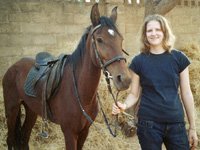
Ishtar: Wow, what nostalgia you awake! Normally I start the day with work, but it’s my intension to start every morning with a quick ride, even if it means going up at six o’clock. Just have to get to bed later, meaning I can’t sit up and blog, hehe! Anyway, work hours in Niger are between 07.30-12.30 followed by a long siesta, only to pick it up again in the afternoon from 3.30-6.30 pm. When I was studying, I used bring out my books in the sun after lunch and wrap up in time to have a ride in the afternoons. Since discovering the solar oven, I normally fix the next day’s lunch in the evening instead of in the middle of the day, and this saves a lot of time as food is ready when you come home and you just have to take it out of the solar oven.

So somewhere after supper, I normally go into the kitchen and put together what seems to be a good mix. I really enjoy cooking and the solar oven has been an intriguing challenge as you have to rethink, as slow cooked food needs to be positioned in a certain way, and you also have to think about differences in texture and moisture. The best thing about solar cooked food however is neither that it’s time consuming or cheap, but the amazing richness is taste that you get!
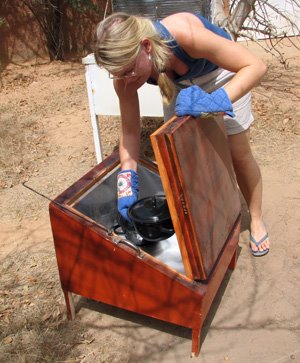
As for the rest of the household chores, there is often a lot of people coming and going while you’re at home. There’s the greengrocer man who sells fruit and vegetables, the meat man who (obviously) sells meat, the egg man from Kania and so on …

People are really into coming home to you in Niger, which is cool since you don’t have to rush around town trying to get hold of people, but it can also get a bit too busy, going from one person to another. There’s a man for just about everything, but the greatest luxury is having your personal tailor come with clothes you get to try at home, and if there is something that doesn’t fit, he fixes it! At least as long as it’s still fixable, that is…

So as you can see, my days are pretty much filled up with work, horses, household stuff and seeing people, an “obligatory” half-an-hour in the sun (I seem to need it as much as coffee and my daily timeout with the horses) and then finally keeping in touch with people in Europe. That’s why I started the blog in the first place, so that I could post all the pictures in the same place and not have to send them around all the time. I was into writing personal newsletters (still do, although not very frequently), but by the time I got them out, all my close friends had already heard the details, so they didn’t find them very interesting anymore…

Szavanna: Please introduce us to the Eden Foundation.

Ishtar: Ah… Eden Foundation is next to Niger the love of my life! Eden is, simply put, quite unique. It’s visionary, it’s down-to-basic kind of aid that makes a genuine contribution. It’s not the place to go if you’re a mainstream kind of person, because you wouldn’t like the time tables we use. If the development work you do is going to be sustainable in the end, it has to start from the inside, and Eden has a lot of patience. We believe in a simple solution, but we let things take their time. And the success has been huge. I came into Eden at a time when there were things to show for all the hard work, but my parents started off with just a vision. My role is easy: I look at the changes that are taking place within our Tanout society and I translate it to Western people so that they can see it for what it really is. I love telling people about Eden. I love holding presentations and telling people about the awakening that has taken place amidst the least developed area in the least developed country in the world. I show pictures of genuine happiness, of proud mothers and their healthy children, of fathers who have understood the value of trees and who have gone against local customs and stopped cutting down their perennials in order to get rid of crop-eating birds. When I present our Eden families to the rich in Europe, they marvel. I still remember the top bankers at a Swedish Rottary club who tanked me for coming to them, saying “We just can’t believe how those people can be so happy.” For them, it was an impossibility. Poor people with nothing but fruits – how could they be so happy? You see, Westerners have all the material but not the happiness. My dad is right when he writes: “It is difficult to understand, but just as the rich never found the right food, they never seem to find the right values either. The worst thing we can do is to be contemptuous toward the poor and their lifestyle. Electricity will not solve their problems, neither will cars. The infrastructure that would open Africa for export and import will not solve their problems and it may never even become a reality. By enabling people to produce their own food, so retaining their intrinsic dignity, they are being given a chance not by being told what to do, but by being given multiple options in life.” He wrote that more than twenty years ago and I still marvel, because there’s continuity about Eden and I like that.

Copyright Eden Foundation 2006

Szavanna: How would you describe Niger to someone who has never been there ( I know it's not easy to give a short description )

Ishtar: Niger is the country that stands still, for better or for worse. It’s a country where things take ages to come about and where stressful people go berserk. But that’s just the thing really. The first two weeks in Niger, when coming from any progressing areas, are disastrous, unless you’ve come for a vacation. However, after those first two transitional weeks, something within in you will change, and the real culture chock actually arrives when you come back to your home country, wondering why everybody is doing what they are without ever asking themselves why…

Szavanna: How did Niger and travelling in general changed how you look at life?

Ishtar: Ah… Niger is my little “life secret”. It’s a special pulse that I carry within me wherever I go. On the outside, I make a perfect Swede, but not a day that goes by when I’m away from Niger that I don’t think about it, when I don’t count the days until I go back. Traveling in general has made me a lot more humble towards other societies, but since I have been traveling since the age of 1, I don’t really know what I was like before I started traveling… :-) It’s just a natural part of my life, living in a world where we may all be very strong individuals, but where we still have to share with all our neighbors. Regardless of how much we have or don’t have in common!
shtar's Page
Authors Page: Szavanna

powered by Peopleized!

Thanks the interview, Szavanna! Loved the questions (as you can see)!
And the photo collage was great!

Ishtar

Wednesday, June 13, 2007

Miss Niger?

When looking through the statistics, I discovered that someone from the World Wide Web had found his way to my site through the keywords "Miss Niger". Seeing that Ishtar News is not much about fashion and lightly-dressed women, the person obviously did not linger, but my interest was awakened as to is there even such a thing as a Miss Niger? After twenty-something years in this country, I have never heard of it, but that could of course be due to my personal lack of interest in Western culture being imposed as a "good thing".

I still don't know if he/she was looking for one of the Nigerian "Miss Niger State" (not only do the neighboring countries have similar, Nigeria also has a state called Niger, adding to the confusion) or the Nigerien "Miss Niger"; but the thing was, I didn't even know that Niger had one.

I checked it out on the Internet and found one Miss Niger (from Niger, not Nigeria) who participated in the Miss Africa International beauty contest, but that did not seem to be an official Niger thing. More interestingly, I found an article by David Simpson, entitled:
Niger: beauty and the beast, which emphasis on how the Nigerien beauty contest was sponsored by the dominant tobacco companies.
Last year's Miss Niger beauty contest demonstrates how the new, smaller tobacco companies can give the big boys a run for their money when it comes to saturation brand coverage in the youth market. The contest was sponsored by Fine cigarettes, manufactured by Seita/Altadis and distributed by Sitab Niger. The wife of Niger's President attended, together with the tourism minister and, significantly for this highly fashion and music conscious nation, a clutch of famous clothes designers and musicians. The event attracted droves of young people and gained extensive television and newspaper coverage. Attractive young women distributed Fine cigarettes, T shirts, caps and bags. Fine also sponsors a biennial international festival of African fashion. Fine's sister brand Excellence sponsors the National Youth Festival, a cultural and sports event attended by more than 3000 young people, and traditional wresting, the most popular sport in Niger, which is covered live on television.
I learned two things in all of this: first of all that there has actually been a Niger Beauty contest (although I have no evidence that there has been one of the last few years) and secondly, that they were run by tobacco companies, who used the opportunity to spread their glorious image of "accomplished people" to the Nigerien middle class. Cigarettes are not expensive in Niger, and this availability makes far too many people dependent on them, without be aware of the damages that they do. Let's not forget that Niger has one of the lowest literacy rates in the world. Concerning politics, Simpson goes on to write:

It is not hard to envisage the odds stacked against any politician or government official who might try to ban tobacco promotion in Niger.

I remember myself what happened when the President wanted to ban the French national lottery from the country - it just wasn't possible and it cost him dearly. I'm really glad that I'm not in charge of a poor nation, because when you are dependent on others, you also have to dance to their cue. You may not agree with Western tobacco or lottery policies, but you are still forced to accept them. If not, all aid and development investments will be pulled back and Niger depends on foreign aid. I can only imagine what that does to your own pride and to the integrity of the nation.

As an idealist, I am proud to be working for Eden, helping people achieve a sustainable life and become independent of all foreign aid. The fruit-bearing trees and bushes that they are establishing allow them to make their own choices in life; and we are spared of tobacco companies running the show.

Ishtar

Tuesday, May 22, 2007

Cash handouts are not helping!

Copyright Eden Foundation 2005

I just read a post today about a journalist in Uganda who was coerced into paying a woman she had interviewed for an article although she felt it went against journalistic work ethics. At first she was reluctant, but her Ugandan colleague seemed to have valid point: ""You're going to get paid for the story, right?" In other words, "You should share."


Now, the question about donating money in Africa is a sensitive point. I know that a lot of people really want to help, and when you arrive as a Westerner in Africa, you are immediately struck by its lack of material wealth. You are almost disgusted by your own fortunate situation. Of course you want to do something and handing out money is the quickest way of settling your own conscience. At least you did something. You gave that person some money. You can go home with a sense of satisfaction.

But what happens then? What happens the next day and the day after that, when there is no one around to hand out that free cash that the receiver didn't have to work for? There is a new trend in the aid world (which is running short of good ideas, it seems) to distribute free cash all over poverty-stricken areas. This is not the time to talk about the politics behind such actions, but if I have learned one thing during the media famine hype of 2005 in Niger, it is that the real aid giants have a clear-cut agenda, and it's not beautiful to watch. Though they are the Holy Cows of our society, it's not so much about helping the poor anymore as it is serving a political or financial purpose.

Back to cash distribution (our new Western new contribution to development), what do we really think will happen when people who have gotten accustomed to Westerners distributing free cash (at a slight cost of one's dignity, of course) one day have to stand on their own again? Where is the sustainability in such aid and do we honestly believe that we have done them a favor?

Though I love Africa and Africans with all my heart, I am all against free handouts, unless it is a true crisis that calls for immediate attention. But when is a situation to be classified as such? I used to be a naive Swedish girl enjoying life in Niger and believing that there were lots of organizations out there doing good in the world - including the Holy Cows. I knew there was a difference between long-term and short-term aid, and although the long-term help (requiring loads of time and patience!) was the only way of reaching a sustainable solution, short-term aid served its function where sudden catastrophes had taken place.

For years we worked in silence in the least developed area in the least developed country in the world - seeing real progress amongst our dedicated Eden farmers. Then one day in 2004, the international media kicked off a major aid carousel and Niger's hyped famine was a fact. There have been a lot of talk after this, with the United Nations and the Holy Cow Aid Giants working on their words, trying to ensure that their involvement is not in anyway resembled to a cry wolf. But the fact remains: they barged into a situation that was not a crisis - just the ordinary harsh reality of every day life - called on everybody's attention to assemble resources to feed these poor malnourished children (why mention that they all had malaria, one of the most deadly diseases you can find?) thereby creating a new source of income for families with undernourished children - a temptation that should not even be there. Little did they care that their receivers borrowed one another's children. Little did they care that the nutritional food packages that they distributed to the mothers (aimed for the children) ended up at the market to be sold. It was all about generating a new charity case and what was selling better than the Nigerien children dying at the hospitals?

As for the consequences of these fantastic handouts, I was both shocked and devastated when I listened to the people around me.
"We know that we're not dying of famine and the images they show on television are clearly exaggerated”, people commented as we talked about the media attention compared with real life. “However, the fact remains that we are poor and they are rich - and it is no more than right that the rich should finally take responsibility for our situation and share some of their wealth!"

My heart broke that year. At first, I thought that the Holy Cows did not know what they were doing; that they meant well and that they just didn’t have the knowledge or the patience to sit down and think through whether or not they were doing the country a service or not. But then I started to hear their arrogance, directed both at the national authorities of Niger, the long-term aid organizations (that would be us) and our fellow Nigeriens. I was not impressed and my heart angered when I realized that they did indeed know what they were doing. They knew exactly what they were doing and on their list of priorities, the welfare of the population was obviously not at the top.

I know there is a difference between a Western journalist paying for an article and aid agencies that should know better but that just doesn’t care, but the problematic remains. Though we do not want to admit it because it’s such a great way of settling our bad conscious, free cash donations only kill people’s own motivation to help themselves and make it all the harder for us long-term helpers to achieve sustainable development.

We all know that we can’t adopt the adult population of poverty stricken areas and feed them indefinitely, so if we really do want to help the poor, we need to give them the resources to rise and stand on their own feet. I love Niger and Nigeriens to bits, but I never offer money. When beggars come, I ignore them, unless they are lepers. Towards my friends, I am tough and often have to go against my own emotions, because yes, it would be so much easier to just give them a little, but I know in my heart that it’s not going to help in the long run.

I love my work in Niger, because Eden’s solution is simple but it wouldn’t work without their own motivation and hard work. We work to find a solution that will enhance their life quality according to their own values – and they get to implement it. People often ask us how come we get people to work with us without paying them off (lol, the consequences of this new aid industry: they poor will not cooperate unless you pay them for their troubles!). Well, to answer that, I can only say: Go figure!

For more information about the media carousel of Niger in 2005, read Eden’s article:

“When Endemic Malnutrition is Labeled as Famine”

Ishtar

Sunday, May 13, 2007

Presenting Eden

Eden family in the Tanout area - Copyright Eden Foundation

Today I had two Eden presentations (one in the morning and one in the afternoon) and they went very well - my first commitment since the news of my mother's illness. I was a little worried at first because I was sooooo dizzy (I didn't sleep much tonight because I somehow got it into my head that the alarm wouldn't go off in the morning; not that it helped worrying about it...), but I survived the day without losing my train of thoughts and the message came through.

I love presenting Eden's work and showing how such a laughably simple solution (helping the farmers establish drought-tolerant trees and bushes that bear fruit, even in times of need) can give such outstanding results; how the poor can be joyful and how easy it can be to achieve a sustainable solution if you only have the time, commitment and patience to see it through.

Collecting Eden fruits from the family field
- Copyright Eden Foundation


Now I am well aware that few projects plan the future in terms of generations and that Eden is quite unique in this matter. I am aware that others think I miss out on many adventures by not changing scenery now and then - after all, with all my knowledge and experience, I could take jobs in so many other places. However, the thing is (and I say this whole-heartedly) that I would rather spend the rest of my life working with one thing that I know truly makes a difference, than spending a few years here and a few years there and in the end not accomplishing any true difference.

A small fortune of Eden fruits - Copyright Eden Foundation

I love Niger with all my heart, despite its weaknesses and turtle-paced progress. I love Eden because I get to help the poorest of the poor - the inhabitants of the least developed area in the least developed country in the world - to achieve a sustainable solution, and we get to do it from scratch. It's a huge challenge, but I love challenges, and so yet again, I am incredible fortunate!

Now, as you may or may not already have figured out, I wish I could be spending all my days (nearly, at least!) in the land "that stands still", the land that so few people know anything about. But I can't at the moment - have to work on my finances etc - but there is one thing I can do here in Sweden which concerns Niger, and that is to be the messenger of glad tidings and let the people of the Developed World know that there really is a solution for the poor, that both poverty and desertification is reversible and that they can be a part of letting that happen. So can you!

Little Illa with his Eden fruits, one my favorite pictures!
- Copyright Eden Foundation


Greetings!
Ishtar

Saturday, December 23, 2006

Setting up the Christmas tree

Although it doesn't feel very christmassy with the heat and all the sunshine, we still did our best to get into the "mood". First step was to set up the Christmas tree, which of course was fake as it would be contradictory to work for Eden and cut down trees at the same time!

As usual, Tabita was happy to "help" out!

And when we were done setting up the tree, she demonstrated what grownups look like after hard work!

Her father helped me set up the lights...

... and her mother helped her father in turned. But by now, Tabita was tired of helping out and went to play with her aunt's doll instead...

Ishtar