Showing posts with label Africa. Show all posts

Monday, July 23, 2007

Women of the Umuofian Society

Copyright Eden Foundation
Ugo Daniels actually inspired this post, because his yam festival contribution in the past edition of the Beautiful Africa blog carnival it immediately made me think of a quote from Chinua Achebe’s novel Things Fall Apart:
“Yam, the king of crops, was a man’s crop.”
As you have found out by now, there are millions of things about Niger that I love and cherish. There are so many nice things to mention about this culture so totally different from the one I was born into, that it would seem that there isn’t anything in there that disturbs me. There are a few however (although I always think life is nicer living if you concentrate on the benefits rather than the disadvantages) and thinking of Achebe’s novel, reminded me of one of those issues.

When Yaronbaba asked me how come I wasn’t married, I took some time to explain the situation to him. I told him that guys in my birth country don’t want to move to Niger because it scares them – they don’t understand the culture or the language and the standard is just not adequate enough. I would be welcome to marry them and spend the rest of my life in Sweden, but what good would that do all the years and experiences I have collected in understanding that one particular area of the world? The other alternative would then be to marry a Nigerien man instead, but polygamy in my eyes bears strong resemblances to the art of dealing with cattle, and I just cannot picture myself the cow of any relationship. When I am in Niger, I walk like a man, I talk like a man and I make room for myself like a man. If a man stares at me, I meet his gaze and keep it until he is the one looks regardless of his social standing. Yaronbaba constantly laughingly reminds me that "Ishtar, you are not a woman, you are a man!" which is a way of saying that we are equals.

That is a rare privilege however for many women in my area of Africa. Back to the novel, Achebe paints a vivid picture of what it's like being a woman in the Umuofian society. I tried doing it justice in a argumentative essay, which brings no answers or solutions to the problem, but rather meant to identify the situation on a broader perspective.
“What was the Situation like for Women in the Umuofian Society and How Did They Respond to it?”

In Western Society today, women’s rights are clearly defined and it is often hard to imagine what it would have been like to live in a situation where one’s gender would decide one’s social order. However, this does not necessitate an intolerable or abusive situation. The portrayal of women’s situation in Things Fall Apart is meant to show that even though men were assumed superior to their wives, there were rules that protected women from abuse and people adhered to the social order of the clan despite some injustices because one did not question the ways of the ancestors.

Copyright Eden Foundation

Women in Umuofia were not considered equal to men and were in many ways discouraged from becoming independent individuals. They were not allowed to participate in important village decisions, but were kept in the background together with the children. When Umuofia was deeply offended by one of its neighbours for instance, all of the men, but only the men, assembled at the marketplace in order to decide what the consequences would be. If a woman had reason to address the elders – who were all men – her case was presented and argued for by her closest male relatives. This happened to Mgbafo, a woman who had run away from an abusive husband. Women in Umuofia never lived by themselves. Girls were married off very early, often around the age of sixteen, going straight from their fathers’ house to their husbands’. They never lived on their own.

Copyright Eden Foundation

The husband would often be several years her senior, leaving the girl at a heavy intellectual disadvantage. Once married, a woman was expected to obey her husband and was not allowed to question his authority. Men and women had little interaction. Wives in Umuofia could be beaten for any trivial matter according to their husbands’ whim. Women did not possess much. Although the children were often much closer to their mothers, they lawfully belonged to their father and would be lost to their mother in case of divorce. Although Umuofia was an agricultural society, women were restricted to sowing coco-yams instead of yam – the villagers’ main livelihood – which limited their means of income. “Yam, the king of crops, was a man’s crop.”

Copyright Eden Foundation

Even though women were considered the weaker gender, they were generally well taken care of. Women were easily frightened. For instance, when the men disguised as ancestral spirits appeared at the town meeting the day that Mgbafo’s case was pleaded before the elders, the women gave up a great shout and ran away. Men considered women foolish and despised them for their weakness. Weakness was in fact designated as a womanly feature and a man without honour in Umuofia was referred to as a woman. Boys were pressured in their teens to believe that unless they would be able to control their wives, they would not be respected as men. “No matter how prosperous a man was, if he was unable to rule his women and children (and especially his women) he was not really a man”. Even crimes were divided into male and female; the greater crimes being male and lesser female. This did not mean however that women were not respected, for even though women were expected to submit to their husbands, physical abuse was generally despised. When Mgbafo’s case was presented at the town meeting, the elders took her side and her husband was advised to humble himself before her relatives and beg her to return to him. “It is not bravery when a man fights with a woman”. As for marriage, some women did marry out of love, which was the case of Ekwefi who ran away from her first husband to live with Okwonko, the love of her life. Though men were allowed to have several wives and their material success was often measured by the number of wives they possessed – the record in the village being nine – some men really loved their wives. This was the case of Ndulue, who was considered inseparable from his first wife Ozoemena. The two were said to have one mind. Women were also highly respected as the mother of a child and the bond was often very strong. If things ever went really wrong, a man could always flee to his motherland, which Okwonko did after he accidentally shot a young boy in the village. “A man belongs to his fatherland when things are good and life is sweet. But when there is sorrow and bitterness he finds refuge in his motherland.”

Copyright Eden Foundation

Though women were at a social disadvantage, they accepted their situation because like all villagers, they submitted to the ways of their ancestors and did not question the structure of their society. Fatalism had a strong grip on the Umuofian society. “A man could not rise beyond the destiny of his chi. The saying of the elders was not true – that if a man said yea his chi also affirmed”. Society was structured according to a strict hierarchy, even amongst the wives themselves, and society depended on it. Women actually played an important part in keeping the Umuofian society intact, because it was they who passed on the religious and cultural heritage to the children. No one went against the Law of the Land, nor questioned the village Oracle who was in direct contact with the gods. Even if the villagers did not always agree with the ways of the society, they adhered to them nevertheless. One example was when ObierikaOkwonko’s home after the latter had been banished from the village, even though the killing was unintentional and Okwonko was Obierika’s best friend.

Copyright Eden Foundation

By today’s standards, life in Umuofia may seem to have been very hard, but for those growing up in a fatalistic society – whether male or female, rich or poor – challenging the ways of the ancestors or one’s chi, as they called it, would have been unthinkable. The Umuofian Society depended on all of its citizens respecting the hierarchy in place and it undeniably worked, until the Europeans arrived. Women were unquestionable unequal to men but were also generally well taken care of. One cannot but admire them, women and men alike, for their bravery in accepting any hardships they encountered and to take each day as it came.

Copyright Eden Foundation


Works Cited

Achebe, China. Things Fall Apart. New York, Anchor Books, 1994
Hope you enjoyed it!
Ishtar

Friday, July 20, 2007

Beautiful Africa - 2nd edition!

Welcome to the second edition of the Beautiful Africa blog carnival! There is a wider spectrum of countries being represented this time, which gladdens me!

We start off with Nigeria, where Ugo Daniels presents Iwa Ji Ofu (New Yam Festival) in Igboland! posted at AfricanLoft. "The Iwa Ji Afo is one of the biggest festivals celebrated by the Igbos," Ugo writes. "This day symbolizes the conclusion of a work cycle and the beginning of another." Just like another AfricanLoft reader commented, this post awakens my memories of Chinua Achebe’s Things Fall Apart. I wish I had had this post at hand when I tried to explain the importance of yam to fellow students. Thanks for reminding us, Ugo!

Next up is Omodudu who presents A Night In Cocody posted at Omodudu, saying, "Just reminscing about Cote D'Ivoire!" An interesting read about how something you don't understand and in many ways don't appreciate, still manages to win your heart.

Szavanna presents Ramatlabama girl posted at Szavanna_blog
where she shares her encounters with an easy-going young girl called Phindi who in 2002 was into Footy (a south african sport, in case you were wondering...) and was interested in learning computer skills. This post is about following your heart and achieving things that other people may very well deem impossible for you. A valuable read!

Neil Ransom presents Country Count 139 and Falling posted at Kate and Neil's Official Website. He grew up in Nairobi, Kenya, leaving when he was 18. "Now, 8 years later, most of what I experience of Africa is the language Americans use to describe it.
The African continent has 54 sovereign nations, colors ranging from dark black to bright white, hundreds of unique cultures, and thousands of languages and dialects. Grouping these 54 countries into one is akin to grouping North and South America, Europe, and the Middle East. It would be like me saying, “oh, I just got back from Norsamereuromiddast…" I really enjoyed this post.

Back to Nigeria, Loomnie inofficially presents On Friendship posted at Loomnie. He asked me to look through his site, and I picked out this post because of its genuineness.

In the previous Beautiful Africa Carnival, Tim Abbott presented 1/3 of the Water Planet. This time he presents The Waters Prevailed Exceedingly Upon the Earth posted at Walking the Berkshire. Go and have a look!

Bringing full focus to Niger, Ishtar (that would be me, yes) presents Niger's national parade posted at Ishtar News, which shows the great variety of cultural richness and heritage that resides within the same country border. Niger is not alone in being shared by a number of different people, all with their own language and cultural heritage. 2006 saw Niger's national day being celebrated in Zinder and the 1½ hour long parade that passed on our street really impressed me, because it brought together people from all corners of the country, each proudly displaying their own heritage, and yet unified under the same flag.

Now, last but not least, Izz wraps us this edition with his contribution I am what I am posted at Izzonline poetry, saying, "This is a poem that celebrates my life as an African." A wonderful and touching read which concludes: "I am what I am, because my Africa is beautiful." A great ending the Beautiful Africa Carnival Edition!

That concludes this edition. Thank you for your contributions! The next carnival is scheduled on the 18th of August. All in all, thirteen contributions were submitted, of which eight were accepted.

Submit your blog article to the next edition of beautiful africa using our carnival submission form. Past posts and future hosts can be found on our blog carnival index page.

Ishtar

Tuesday, June 26, 2007

Land of Eden

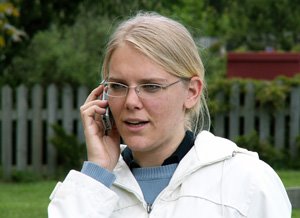
My turn to be peopleized! Szavanna, the Hungarian music lover (currently living in SA) whom I interviewed a little while ago, has interviewed me back! The original interview is posted on her site Szavanna Blog, entitled Niger - Land of Eden - as seen by Ishtar.

Niger - Land of Eden - an interview with Ishtar

Peopleized by: Szavanna - Monday, 25 June 2007


About Ishtar, Niger and the Eden foundation - just an intro actually - make sure you get the bigger picture on Ishtar's blog - once you have seen her it - you will probably spend the rest of your night reading through all her stories.

Szavanna: Hi Ishtar - thanks for agreeing to answer my questions. My first question of course is - how did you end up in Niger in 1986? What connections did your parents have with Africa?

Ishtar: My Dad first crossed the Sahara desert the mid 1970s, when the first seed of Eden was born. There’s an article on Eden’s website entitled The Lost Treasures of Eden, which talks about how he came across a plant growing in the middle of nowhere. He was struck by its potential and wondered what the consequences would be if such a plant could give human food.

My parents chose Niger because out all the countries in West Africa, it was the country most threatened by desertification, and yet was at the time receiving the least international aid. So that’s the reason why we packed all our belongings and drove south from Tunisia to Niger, a journey that took a little more than five weeks.

Szavanna: You write that you stay 6 months in Sweden and 6 months in Niger - what do you do in those half-year periods?

Ishtar: Well, when I’m in Africa, I work with PR, writing Eden newsletters and articles, working with correspondence and training the Eden field team in what kind of information our sponsors (most of the private people) are interested in hearing. We have a very rich material with 7000 pictures and lots of social documentation, so to me, it’s a dream job because there is always something to say.

The only catch with working as a volunteer in Niger is that I don’t get paid, so when I’m in Sweden, I mostly work (for money, currently I have two jobs), hold Eden presentations and catch up with friends and family.

Szavanna: Describe a day in Niger - what do you do from the moment you wake up till you go to sleep?

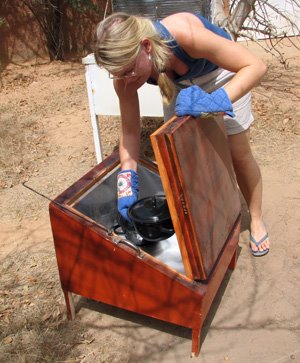
Ishtar: Wow, what nostalgia you awake! Normally I start the day with work, but it’s my intension to start every morning with a quick ride, even if it means going up at six o’clock. Just have to get to bed later, meaning I can’t sit up and blog, hehe! Anyway, work hours in Niger are between 07.30-12.30 followed by a long siesta, only to pick it up again in the afternoon from 3.30-6.30 pm. When I was studying, I used bring out my books in the sun after lunch and wrap up in time to have a ride in the afternoons. Since discovering the solar oven, I normally fix the next day’s lunch in the evening instead of in the middle of the day, and this saves a lot of time as food is ready when you come home and you just have to take it out of the solar oven.

So somewhere after supper, I normally go into the kitchen and put together what seems to be a good mix. I really enjoy cooking and the solar oven has been an intriguing challenge as you have to rethink, as slow cooked food needs to be positioned in a certain way, and you also have to think about differences in texture and moisture. The best thing about solar cooked food however is neither that it’s time consuming or cheap, but the amazing richness is taste that you get!

As for the rest of the household chores, there is often a lot of people coming and going while you’re at home. There’s the greengrocer man who sells fruit and vegetables, the meat man who (obviously) sells meat, the egg man from Kania and so on …

People are really into coming home to you in Niger, which is cool since you don’t have to rush around town trying to get hold of people, but it can also get a bit too busy, going from one person to another. There’s a man for just about everything, but the greatest luxury is having your personal tailor come with clothes you get to try at home, and if there is something that doesn’t fit, he fixes it! At least as long as it’s still fixable, that is…

So as you can see, my days are pretty much filled up with work, horses, household stuff and seeing people, an “obligatory” half-an-hour in the sun (I seem to need it as much as coffee and my daily timeout with the horses) and then finally keeping in touch with people in Europe. That’s why I started the blog in the first place, so that I could post all the pictures in the same place and not have to send them around all the time. I was into writing personal newsletters (still do, although not very frequently), but by the time I got them out, all my close friends had already heard the details, so they didn’t find them very interesting anymore…

Szavanna: Please introduce us to the Eden Foundation.

Ishtar: Ah… Eden Foundation is next to Niger the love of my life! Eden is, simply put, quite unique. It’s visionary, it’s down-to-basic kind of aid that makes a genuine contribution. It’s not the place to go if you’re a mainstream kind of person, because you wouldn’t like the time tables we use. If the development work you do is going to be sustainable in the end, it has to start from the inside, and Eden has a lot of patience. We believe in a simple solution, but we let things take their time. And the success has been huge. I came into Eden at a time when there were things to show for all the hard work, but my parents started off with just a vision. My role is easy: I look at the changes that are taking place within our Tanout society and I translate it to Western people so that they can see it for what it really is. I love telling people about Eden. I love holding presentations and telling people about the awakening that has taken place amidst the least developed area in the least developed country in the world. I show pictures of genuine happiness, of proud mothers and their healthy children, of fathers who have understood the value of trees and who have gone against local customs and stopped cutting down their perennials in order to get rid of crop-eating birds. When I present our Eden families to the rich in Europe, they marvel. I still remember the top bankers at a Swedish Rottary club who tanked me for coming to them, saying “We just can’t believe how those people can be so happy.” For them, it was an impossibility. Poor people with nothing but fruits – how could they be so happy? You see, Westerners have all the material but not the happiness. My dad is right when he writes: “It is difficult to understand, but just as the rich never found the right food, they never seem to find the right values either. The worst thing we can do is to be contemptuous toward the poor and their lifestyle. Electricity will not solve their problems, neither will cars. The infrastructure that would open Africa for export and import will not solve their problems and it may never even become a reality. By enabling people to produce their own food, so retaining their intrinsic dignity, they are being given a chance not by being told what to do, but by being given multiple options in life.” He wrote that more than twenty years ago and I still marvel, because there’s continuity about Eden and I like that.

Copyright Eden Foundation 2006

Szavanna: How would you describe Niger to someone who has never been there ( I know it's not easy to give a short description )

Ishtar: Niger is the country that stands still, for better or for worse. It’s a country where things take ages to come about and where stressful people go berserk. But that’s just the thing really. The first two weeks in Niger, when coming from any progressing areas, are disastrous, unless you’ve come for a vacation. However, after those first two transitional weeks, something within in you will change, and the real culture chock actually arrives when you come back to your home country, wondering why everybody is doing what they are without ever asking themselves why…

Szavanna: How did Niger and travelling in general changed how you look at life?

Ishtar: Ah… Niger is my little “life secret”. It’s a special pulse that I carry within me wherever I go. On the outside, I make a perfect Swede, but not a day that goes by when I’m away from Niger that I don’t think about it, when I don’t count the days until I go back. Traveling in general has made me a lot more humble towards other societies, but since I have been traveling since the age of 1, I don’t really know what I was like before I started traveling… :-) It’s just a natural part of my life, living in a world where we may all be very strong individuals, but where we still have to share with all our neighbors. Regardless of how much we have or don’t have in common!
shtar's Page
Authors Page: Szavanna

powered by Peopleized!

Thanks the interview, Szavanna! Loved the questions (as you can see)!
And the photo collage was great!

Ishtar

Saturday, June 16, 2007

Beautiful Africa - 1st edition!

Proudly presenting Beautiful Africa's kickoff! This first edition has kicked off with a strong focus on the Middle East.

First of all (and first to contribute to the carnival!), Howidiedtoday presents Siwa, Egypt: An Isolated And Flourishing Oasis Populated By A Community Of Gracious Berbers, a dream holiday in a mysteriously beautiful oasis where people go out of their way to welcome visitors to their town.

"I know that most people think of Egypt as being Middle East," she says, "which is why I thought it would be even more unique for this article to be featured. "

Zenofeller
presents Xenophillia, where he talks about Egyptian perfume! Ha, I have been to Egypt just once in my life, and that was 21 years ago. I remember our excursion to the pyramids, the mini Pepsi cola bottles and the tiny boutiques, filled with just that: perfume!

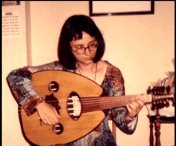
In Naseer and the Lute, Szavanna presents a story about Tunisian music lessons and tells what it was like to fulfill a dream and learn how to play the Arabian lute - "a beautiful string instrument" that similarly to the violin is "fretless".
Read and enjoy!

In 1/3 of the Water Planet, Tim Abbott presents his reflections on deserts and his firsthand experience with Namibia.
"Deserts are alive," he writes, "and have supported life of remarkable variety and resilience. "This is a very interesting post about one of the most fascinating landscapes on earth. Go and have a look!


In Best Dressed Nigerians Hated by South Africans, Izz talks about his encounter with African inter-racism in South Africa when looking for a decent barber.

"My point," he writes, "we can learn a lot from places that are melting pots of nations and kaleidoscope of cultures such as Sunnyside."

Beaman presents some good humour in Constance: Noodle and Laxatives in Berlin; a short truestory about a girl from Cameroon in Berlin.

Finally, there is a post at the former Ishtar News site entitled First day for the 19th time. I have been going back and forth between Africa and Europe for as long as I can remember, and yet, the cultural differences never cease to amaze me. For the Twentieth 'First day experience', have a look at Back in Niger hosted on this site.

That concludes this edition. Thank you for your contributions! The next carnival is scheduled in mid July.

Submit your blog article to the next edition of beautiful africa using the carnival submission form. Past posts and future hosts can be found on the blog carnival index page.

Ishtar

Thursday, May 03, 2007

Claiming the Internet

There's so much you can do with your blog that tending to it could actually be a full time job! Unfortunately, I don't have time for that... Africa is waiting! :-)

Ishtar